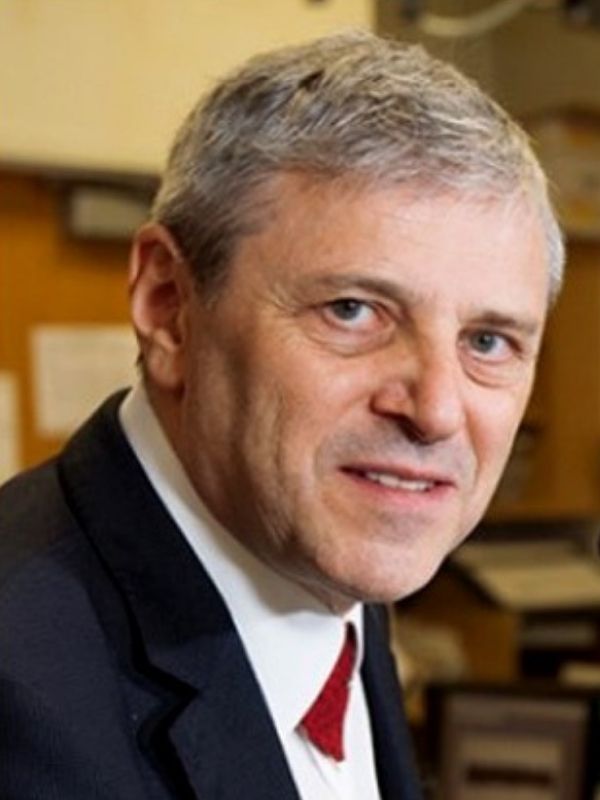
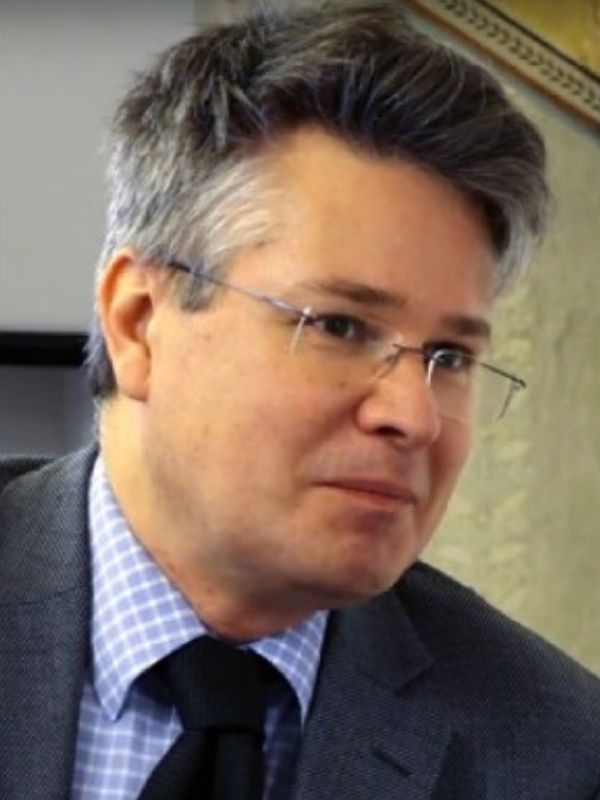
Scientific Vice President and Rector, Széchenyi István University
Director, Artificial Intelligence Center
Ferenc Friedler was born in Veszprém, Hungary. He obtained his degree in Mathematics in 1977 from the Faculty of Natural Sciences
at József Attila University (now the University of Szeged). Based on his research in the optimization of chemical engineering systems,
he earned the Candidate of Sciences degree in 1990 and the Doctor of Sciences degree in 1995.
Academic and Professional Career
He began his professional career at the Hungarian Academy of Sciences’ Research Institute of Chemical Engineering as an academic fellow,
later serving as a founding group leader and department head between 1979 and 1997.
At the University of Veszprém (now the University of Pannonia), he became an associate professor in 1993 and a full professor in 1997.
He founded and chaired the Department of Systems and Computer Science from 1993 to 2015.
Between 2001 and 2003, he served as Director of the Institute of Information Technology. From 2003 to 2011, he was the founding Dean
of the Faculty of Information Technology at the University of Pannonia, and from 2011 to 2015 he served as Rector of the University.
In 2015, he was appointed Deputy President of the National Research, Development and Innovation Office (NRDIO), a position he held until 2016.
Between 2015 and 2020, he was a full professor at Pázmány Péter Catholic University, where he founded and directed the
Laudato Si’ Institute for Process Systems and Sustainability until 2020.
Since 2020, he has been a Research Professor at Széchenyi István University, serving simultaneously as Scientific Director of the University’s
Vehicle Industry Research Center and Head of the National Laboratory for Artificial Intelligence. As of February 1, 2023, he has held the position
of Scientific Vice President and Rector of Széchenyi István University.
International Experience and Collaborations
Professor Friedler has initiated and participated in numerous international research collaborations. Between 1990 and 1999,
he was an appointed researcher at Kansas State University (Manhattan, KS, USA).
Visiting Professor:
- University of Surrey, UK (2002–2008)
- École Polytechnique Fédérale de Lausanne (EPFL), Switzerland (2005)
- Imperial College London, UK (2010–2012)
Research Areas and Scientific Contributions
His primary research fields include mathematical modeling and optimization, as well as their engineering applications.
He is the originator of the P-graph and S-graph methodologies.
The P-graph methodology was developed to solve network synthesis problems that fundamentally determine the efficiency of production processes.
Its applications include:
- Engineering system design (optimal safety systems, fault diagnosis of processor arrays)
- Analysis of chemical reaction mechanisms
- Supply chain optimization
- Metabolic network analysis
- Energy network design
The S-graph methodology provides a novel representation and efficient algorithms for the optimal scheduling of batch processes.
Publications and Scientific Impact
Professor Friedler has authored more than 200 scientific publications. His award-winning software received the
Vaaler Award (New York, USA, 1997). His research results have been incorporated into university-level textbooks in the United States.
He has delivered over 300 presentations at international conferences and has accumulated several thousand independent citations.
Since 1995, he has led more than 100 national and European Union-funded research and development projects.
Educational and Talent Development Activities
His educational and academic leadership activities focus on engineering sciences, particularly information technology.
He received his first leadership appointment in 1985 to establish a research group.
He has served as a supervisor and doctoral advisor, founder of doctoral schools, and developer and lecturer of computer science curricula.
He has successfully supervised numerous doctoral dissertations in Hungary and abroad.
In 2001, he initiated and sponsored the Pál Erdős Mathematical Talent School. He also developed the principles of the
“Fasori Program”, an elite university education initiative.
Awards Founded
- György Pólya Award (2002) – for secondary school teachers
- László Hadnagy Award (2010) – supporting talented students
- Pannonia Award for Higher Education (2011) – recognizing Hungarian professionals
- Pannonia Award (2013) – for outstanding international research
- John von Neumann Professor title (2017) – co-founded with the Rector of Budapest University of Technology and Economics, honoring world-renowned scientists
Professional and Public Service Roles
- President, Informatics Committee of the Hungarian Academy of Sciences (2005–2011, two terms)
- Co-President, Cybernetics Committee of the Hungarian Chemical Society (from 1998)
- President, IT Scientific Committee of the Hungarian Rectors’ Conference (2010–2015)
- President, John von Neumann Computer Society (2011–2019)
- Scientific Secretary (6 years) and Vice President (6 years), Regional Committee of Veszprém, Hungarian Academy of Sciences
- Board Member, European Federation of Chemical Engineering (EFCE) (2018–2021)
He is also a member of the editorial boards of several national and international journals, including:
Applied Mathematics Journal, Acta Polytechnica Hungarica, Computational Management Science, Chemical Engineering Transactions,
Current Opinion in Chemical Engineering.
Major Awards and Honors
- Knight’s Cross of the Order of Merit of the Republic of Hungary (2003)
- László Kalmár Award (2003)
- Prima Primissima Award – Veszprém County (2006)
- Polinszky Award (2006)
- John von Neumann Award (2007)
- Leó Szilárd Award (2008)
- Dénes Gábor Award (2008)
- Széchenyi Prize (2010)
- Bolyai Memorial Medal (2010)
- Minister of Interior Merit Award for Extraordinary Service during the Red Mud Disaster (2011)
- Honorary Doctorate, National Technical University “Kharkiv Polytechnic Institute” (2012)
- Honorary Member, Czech Chemical Society (2021)