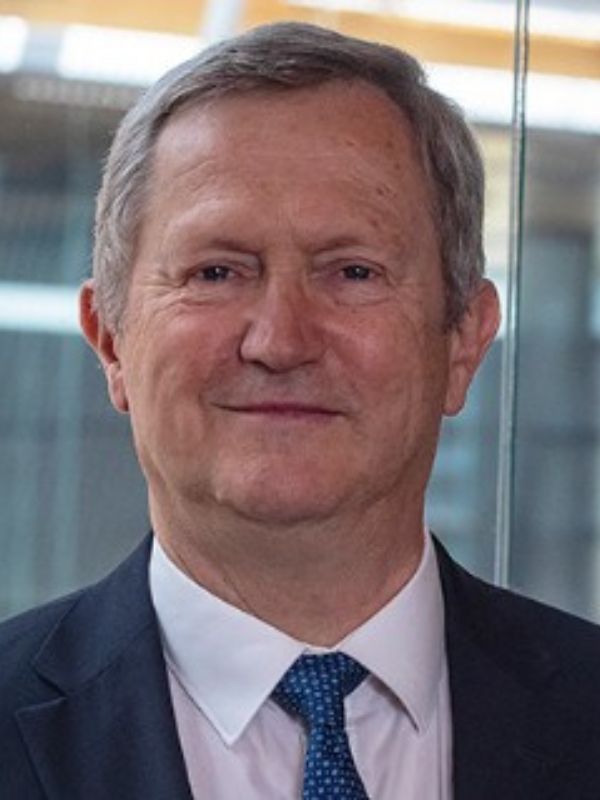
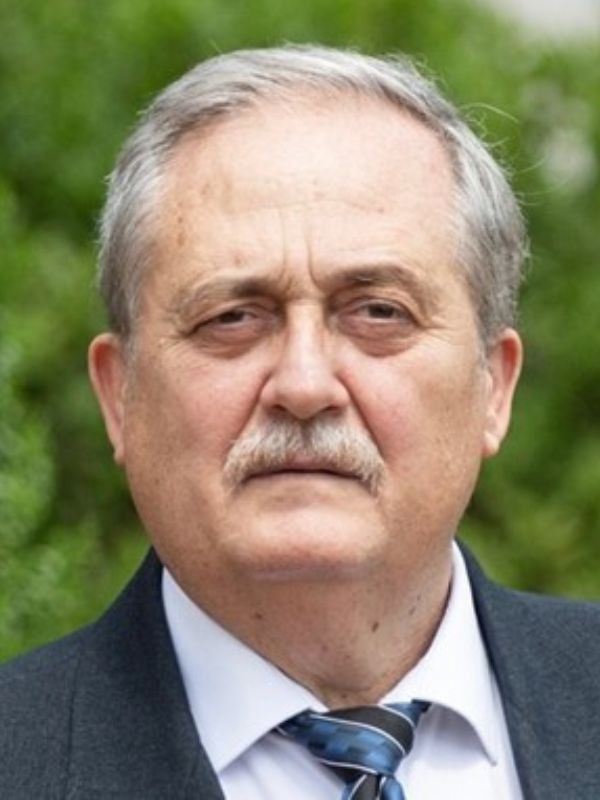
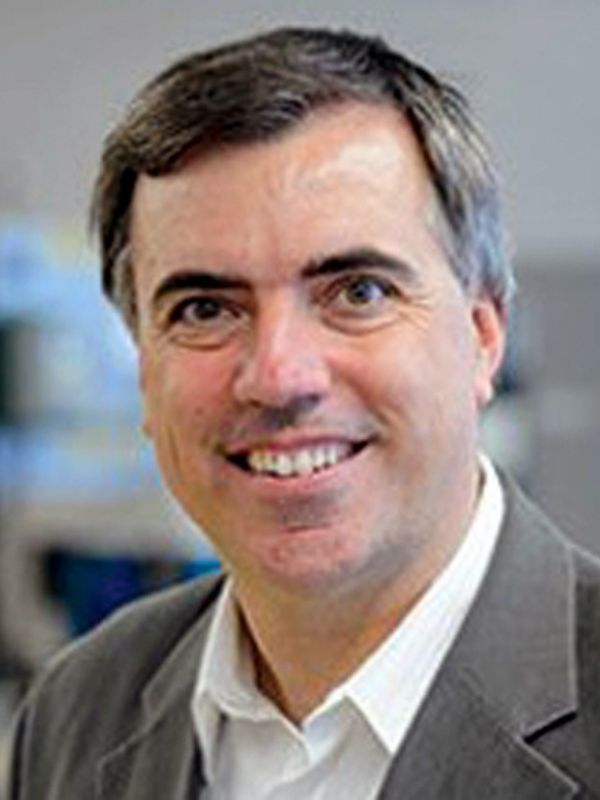
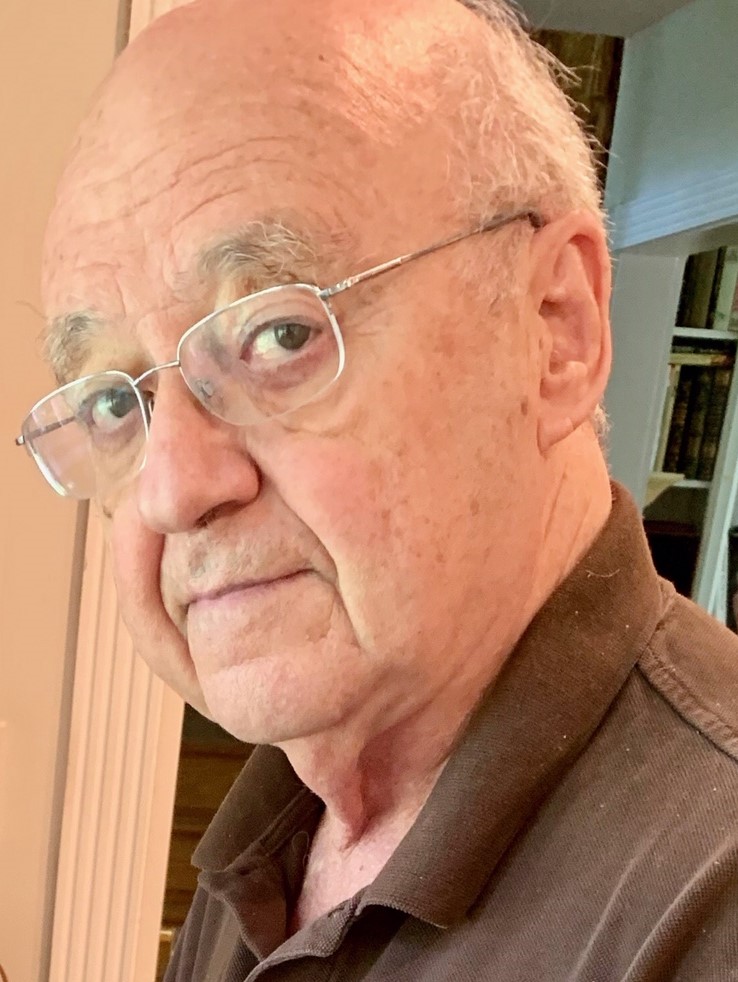
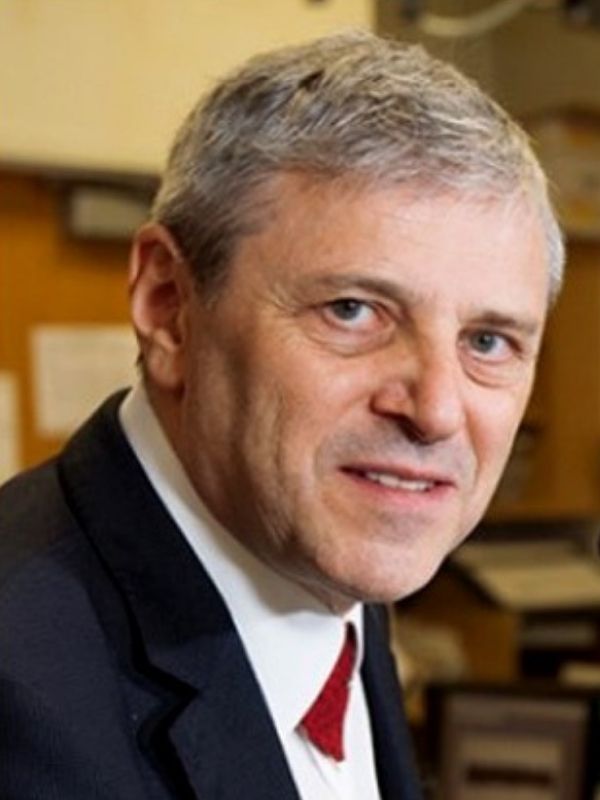
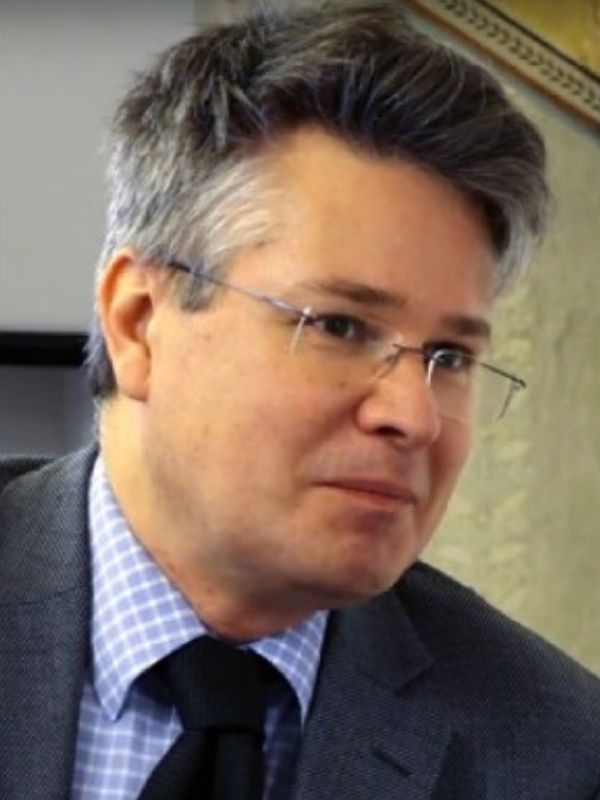
Ákos Vértes
Professor Emeritus, The George Washington University
Member of the National Academy of Inventors (USA)
External Member of the Hungarian Academy of Sciences
Member of the American Association for the Advancement of Science (AAAS)
Ákos Vértes was born in Budapest, Hungary. He completed his studies in chemistry
at Eötvös Loránd University, where he earned his degree in Chemistry in 1974 and
obtained his PhD in 1979.
Academic and Professional Career
In 1979, he joined the Central Research Institute for Physics of the Hungarian
Academy of Sciences as a research scientist and was promoted to senior research
scientist in 1987. Between 1986 and 1989, he served as Deputy Head of the
Department of Chemistry.
From 1987 to 1991, he was an Assistant Professor at the University of Antwerp,
Belgium.
In 1991, he was invited to the Department of Chemistry at The George Washington
University in Washington, DC, to a tenure-track Associate Professor position.
He received tenure in 1996 and was appointed Deputy Chair of the department in 1997.
In 2000, he was promoted to Full Professor, and in 2003 he received a secondary
appointment as Professor in the Department of Biochemistry and Molecular Biology.
In 2002, he co-founded the W. M. Keck Institute for Proteomics Technology
and Applications at The George Washington University, where he served as
Co-Director.
Research Activities and Institutional Collaborations
In parallel with his university duties, from 1993 to 2003 he worked as a Visiting
Scientist at the U.S. Naval Research Laboratory in Washington, DC. From 2003 to
2008, he was an external research scientist at the National Institutes of Health
(NIH) in Bethesda, Maryland.
Scientific and Technological Innovations
In 2007, Professor Vértes developed a novel ambient ionization technique for
mass spectrometric analysis, termed
Laser Ablation Electrospray Ionization (LAESI).
The LAESI technology enabled direct analysis of biological tissues, two- and
three-dimensional molecular imaging, as well as mass spectrometric investigation
of individual cells.
A key innovation of the method was the interpretation of cells as image voxels,
which opened the door to high-throughput single-cell metabolomics. This approach
made it possible to uncover metabolic heterogeneity between cells and identify
previously hidden cellular functions.
The LAESI technology was recognized by The Scientist magazine as one of
the “Top 10 Innovations” in 2011, and in 2012 it was listed by
R&D Magazine among the 100 most significant technological innovations.
In 2009, Professor Vértes’ research group developed a nanophotonic ionization
platform known as the Silicon Nanopost Array (NAPA).
This technology enabled ultrasensitive analysis and molecular imaging using
laser desorption ionization.
NAPA was successfully applied, among other uses, to the analysis of the chemical
composition of yeast cells exposed to oxidative stress, and in 2015 the
technology was commercialized under the name REDIchip.
His laboratory was the first to demonstrate mass spectrometric detection of
intracellular metabolite and neuropeptide gradients.
Large-Scale Research Projects
Between 2014 and 2020, Professor Vértes served as Principal Investigator of a
large, multi-institutional research program aimed at the rapid identification
of mechanisms of action of emerging biological and chemical threats.
His work employed high-throughput and ultrasensitive systems biology,
proteomics, and metabolomics approaches, as well as novel biological tissue
imaging techniques.
In another interdisciplinary project, he contributed to the single-cell
resolution investigation of metabolic pathways involved in biological
nitrogen fixation.
Scientific Output and Honors
Since 2024, Ákos Vértes has held the title of Professor Emeritus at
The George Washington University. His scientific achievements include
more than 200 peer-reviewed publications,
over 10,000 citations (H-index = 56),
and two co-edited volumes.
He is a co-inventor on 19 patents, several of which have been
successfully commercialized with industrial partners.
His honors include The George Washington University
Distinguished Researcher Award,
the Hillebrand Award (2012),
and the Oscar and Shoshana Trachtenberg Science Award.
In 2025, he was elected an External Member of the Hungarian Academy of Sciences.
Visiting Professorships and International Collaborations
He has served as a Visiting Professor at Lawrence Berkeley National Laboratory,
as a distinguished visiting researcher of the Hungarian Academy of Sciences,
at Shanghai Jiao Tong University, and twice at the Swiss Federal Institute of
Technology (ETH Zurich).
He maintains active research collaborations with several Hungarian institutions,
including the Research Centre for Natural Sciences, the University of Debrecen,
the University of Pécs, and the Balaton Limnological Research Institute.