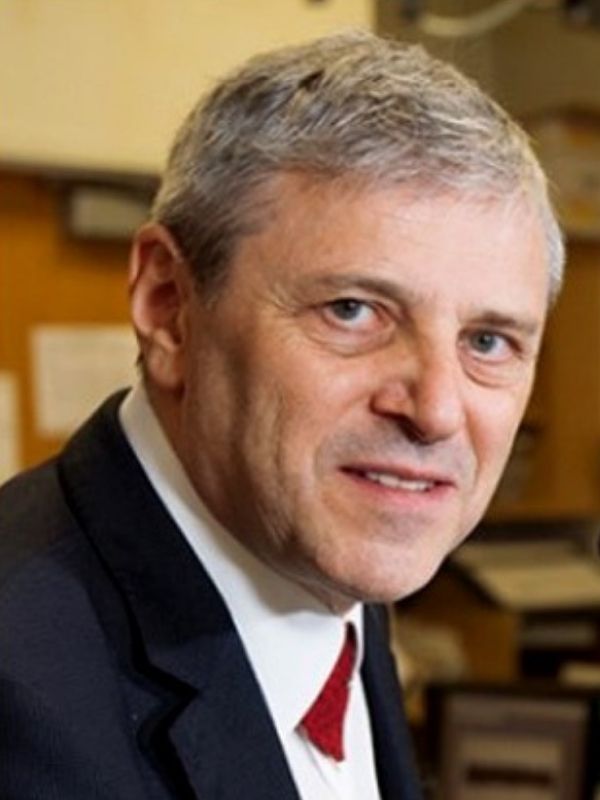
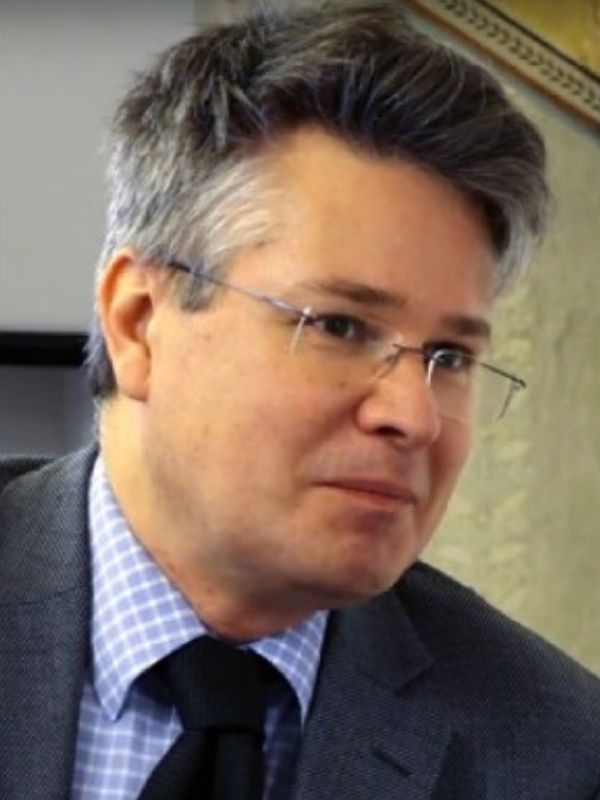
Széchenyi Prize–winning Hungarian physicist, particle physicist, university professor
Doctor of Physical Sciences
Full Member of the Hungarian Academy of Sciences
Founding member of the KEMPELEN Academy of Sciences Foundation
Dr. Ferenc Mezei is one of the most influential and internationally
renowned figures in the history of Hungarian physics in the 20th century.
His scientific work has fundamentally shaped experimental neutron physics,
solid-state physics, and advanced materials research.
Scientific Discoveries and Innovations
He is best known for the discovery of the
neutron spin echo (NSE) principle in 1972,
which revolutionized experimental neutron and solid-state physics,
as well as for the development of the first spectrometer based on this
principle in 1978.
His further groundbreaking contributions include the development of the
supermirror concept (1976) and the formulation of the
long-pulse neutron source principle (1995).
International Academic Career
Since 1972, his professional life and scientific activity have been closely
associated with France, Germany, the United States, and Sweden, while he has
continuously maintained strong ties with the Hungarian scientific community.
In 1982 he was elected Corresponding Member, and in 1987 Full Member,
of the Hungarian Academy of Sciences. He actively contributes to the work
of the Academy’s Committee on Solid State Physics.
Since 1990, he has been a member of the Academia Europaea,
President of the Publications Committee of the European Physical Society (EPS),
and a member of the Magnetism Commission of the International Union of Pure and Applied Physics (IUPAP).
Earlier in his career, he organized and led for many years the
Youth Physics Circle of the Eötvös Loránd Physical Society,
playing a key role in talent development and science education.
Awards and Honors
- Pál Selényi Prize (1973)
- Hewlett-Packard Europhysics Prize – European Physical Society (1986)
- Loránd Eötvös Memorial Medal (1991)
- Leó Szilárd Prize – Hungarian Nuclear Society (1994)
- Officer’s Cross of the Hungarian Order of Merit (1995)
- Jenő Wigner Prize (1999)
- Walter Hägl Prize – European Neutron Scattering Association
- Széchenyi Prize (2013)
In 2008, he was awarded the title of Doctor Honoris Causa
by the University of Debrecen.
Current Activities and Scientific Service
He currently serves as Technical Coordinator of the
European Spallation Source (ESS),
the international neutron research facility under construction in Lund, Sweden.
He is the author of approximately 100 scientific publications,
primarily published in international journals and edited volumes.
He has served as a member of the editorial boards of
Europhysics Letters (1988–1996),
Zeitschrift für Physik,
and since 1995, the Journal of Neutron Research.